


Thoughtful care for a natural material
SIMPLE RULES FOR LASTING BEAUTY
Unlike many synthetic materials, genuine sheepskin is designed to be lived with.
It is naturally durable, forgiving, and remarkably easy to care for. With a little attention and occasional maintenance, your sheepskin can remain beautiful for many years to come.
ESSENTIAL SHEEPSKIN CARE TIPS
1. Protect from direct sunlight
To preserve the original colour of your sheepskin, avoid prolonged exposure to direct sunlight or bright windows. As a natural fiber, wool may gradually fade or change tone where sunlight consistently hits the hide. If placement near a window is intentional, we recommend rotating your sheepskin regularly for more even ageing.
2. Give it a good shake
A vigorous shake outdoors helps release dust and refresh the wool naturally.
3. Act quickly with spills
If something spills on your sheepskin, blot immediately using a clean cloth. Dab gently — never rub — as rubbing may push the stain deeper into the wool fibres.
4. Vacuum occasionally
For larger pieces such as rugs, double sheepskins or heavily used items, occasional light vacuuming can help remove accumulated dust or crumbs. Use a standard suction setting and avoid rotating brush attachments where possible.
6.When in doubt, seek professional care
For difficult stains or uncertainty around cleaning, we recommend consulting a professional dry cleaner experienced with natural sheepskin and wool products.
In general, we do not recommend fully washing genuine sheepskins unless absolutely necessary.
With regular shaking and quick spot-cleaning of everyday mishaps, most sheepskins will never require a full wash.
It is important to understand that sheepskin is a natural material — not a synthetic textile. Once submerged in water, the hide and wool will naturally change in texture and appearance to some degree. A washed sheepskin will rarely look exactly the same as it did before washing.
The suede backing is particularly sensitive to moisture. If not dried properly, it can become stiff or cardboard-like as the natural leather fibers harden during drying.
If washing becomes necessary:
- Always use cold or lukewarm water only
- Use a wool-safe or sheepskin-specific detergent
- Avoid bleach, fabric softeners, or harsh chemicals
- Never use high heat
- Never tumble dry
- Avoid excessive soaking whenever possible
After washing:
- Gently reshape the hide while damp
- Allow it to air dry naturally, away from direct sunlight and heat sources
- Stretch and massage the suede occasionally during drying to help soften the leather
- Once fully dry, lightly brush the wool to restore texture and loft
Please note that some changes are normal after washing, including:
- slightly firmer suede backing
- changes in wool texture or fluffiness
- minor shrinkage or reshaping
- less “airy” appearance in long wool pieces
For valuable, oversized, or specialty sheepskins, professional cleaning by an experienced sheepskin or wool specialist is always the safest option.
Natural materials age beautifully when cared for thoughtfully — and often, less intervention is best.




THE PET SITUATION
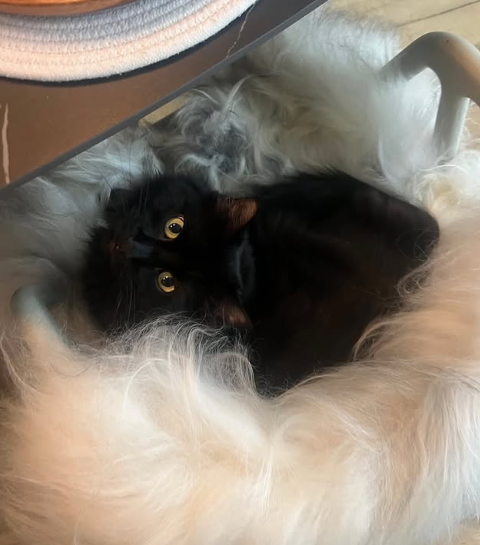
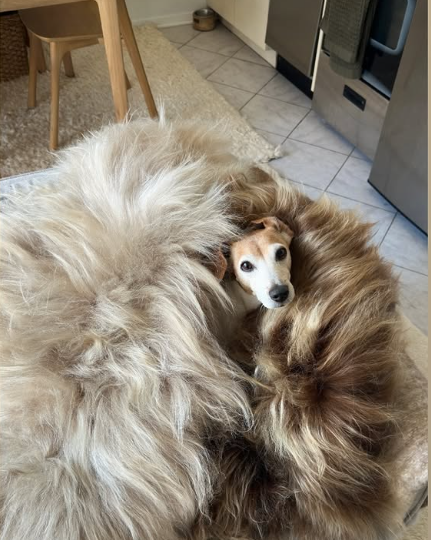
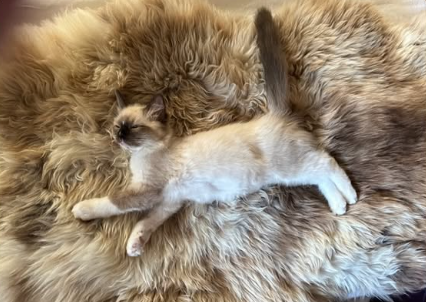
Let’s be honest — pets absolutely love sheepskins.
Dogs and cats are naturally drawn to wool for its warmth, softness, scent, and comfort. In many homes, the sheepskin quickly becomes their favourite spot long before the humans get a chance to claim it.
And while we love seeing pets enjoy our sheepskins, life occasionally happens too. Muddy paws. Upset stomachs. Little accidents. Below are some gentle cleaning recommendations to help care for your sheepskin when those moments occur.
Digestive mishaps
- Using a spoon, or butter knife, gently remove as much of the solid matter as possible
- Mix a small amount of wool-safe detergent with cool water to create a mild cleaning solution
- Using a soft cloth, gently blot the affected area
- Rinse lightly with a clean damp cloth using cool water
- Blot excess moisture with a dry towel or paper towel. Allow to air dry naturally
Unexpected Puddles
- Dilute the affected area using a damp cloth with cool water
- You may add a small amount of wool detergent or use a 1:1 mixture of white vinegar and cool water
- Gently dab the area with a clean damp cloth to remove residue
- Blot dry using a paper towel or clean cloth
- Allow to air dry naturally
Vomit
- Using a spoon or butter knife, gently remove as much material as possible
- Mix a small amount of wool-safe detergent with cool water
- Using a soft cloth, gently blot the affected area
- Rinse lightly using a clean damp cloth and cool water
- Dab away excess moisture with a dry towel or paper towel
- Allow to air dry naturally
Garden Expeditions
If the mud is still wet, carefully remove as much as possible without rubbing it deeper into the wool.
Option 1 - Dry method
- Allow the mud to dry fully
- Gently separate the wool fibres using your fingers
- Lightly vacuum remaining dirt particles
Option 2 - Damp cleaning
- Use a clean damp cloth with cool water to gently rinse the affected area
- Blot away excess moisture with a dry towel or paper towel
- Allow to air dry naturally
As always, avoid soaking, machine washing, hot water, bleach, or tumble drying. Genuine sheepskin responds best to gentle care — even in homes with very enthusiastic pets.
REINDEER HIDE CARE
Reindeer hides are naturally delicate and require a little different care than sheepskins.
Unlike sheep's wool, reindeer hair is hollow. This unique structure helps reindeer survive extreme Arctic temperatures by trapping air and providing exceptional insulation. It also makes their hides incredibly lightweight—but more fragile.
Because the hairs are hollow, they can break away from the hide more easily than sheep's wool. For this reason, some shedding is completely normal and is part of the natural character of genuine reindeer hide.
How to minimize shedding
We recommend enjoying your reindeer hide primarily as a decorative piece rather than placing it in a high-traffic area. Please do not place furniture of hides.
To help minimize shedding:
- Avoid placing heavy furniture directly on the hide.
- Keep it away from areas with frequent friction, such as chairs or seating used every day.
- Occasionally take it outside and give it a gentle shake to remove loose hairs.
- Avoid aggressive brushing or excessive handling.
As the loosest hairs naturally release, many customers find that shedding becomes less noticeable over time.
The fireplace myth
We know what you're thinking.
A beautiful reindeer hide in front of a roaring fireplace is practically the image that comes to mind when you picture a Scandinavian cabin.
Pinterest loves it. Cabin commercials love it.
Your reindeer hide does not.
Despite how often reindeer hides are styled beside fireplaces in photographs and advertisements, direct radiant heat can seriously damage them.
Reindeer hair is uniquely adapted for Arctic conditions. Its hollow structure traps air—but excessive indoor heat can dry out both the hair and the leather backing. When exposed to strong radiant heat from a fireplace, the hairs can become dry and brittle, causing them to break or release from the hide. This can result in what appears to be excessive or sudden shedding.
Please keep your reindeer hide well away from fireplaces, radiators, heat vents and other direct heat sources.
We know—it may look incredibly cozy.
But your reindeer hide will be much happier admiring the fireplace from a safe distance.
A natural material with a natural personality
Reindeer hides are not designed to behave like synthetic rugs or durable sheepskins. They are delicate, natural pieces, and their unique structure is part of what makes them so special.
Treat yours gently, keep it away from heat and heavy traffic, and enjoy it as the beautiful, one-of-a-kind decorative piece it is.